
Olieslaan.nl - Logo - Commissie Olieslaan

Commission Olieslaan – English

Committee

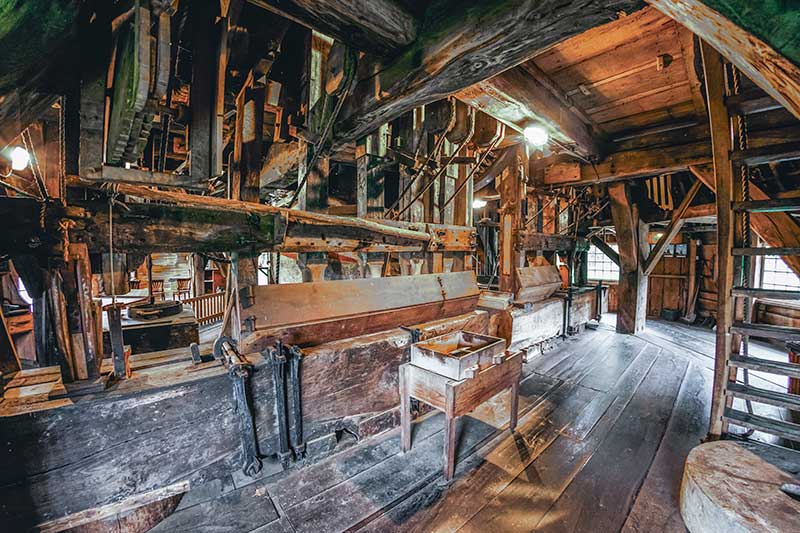
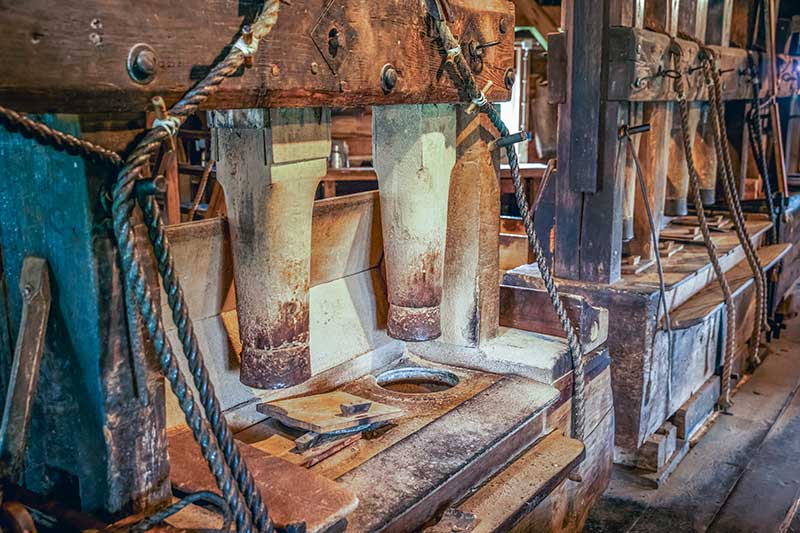
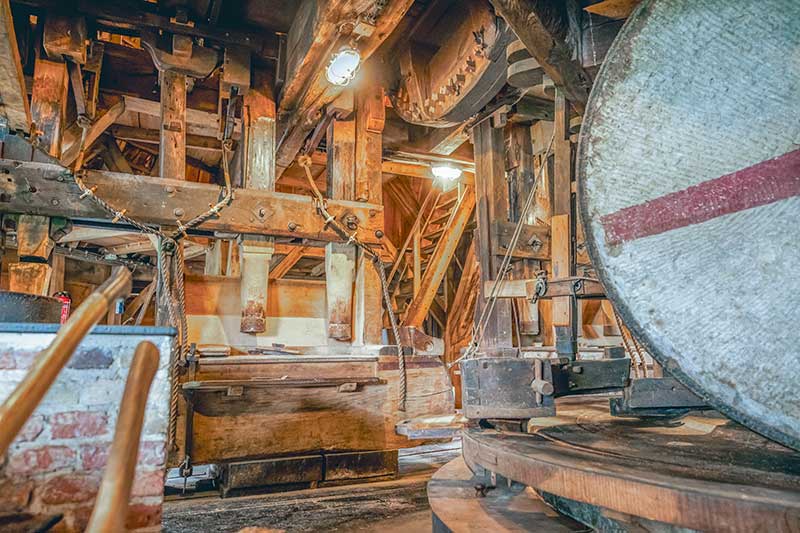
The Olieslaan Committee has taken the initiative to add the oil-pressing craft to the Intangible Heritage of the Netherlands inventory. The Olieslaan Committee consists of the Woldzigt oil and flour mill, the Eerbeekse Oliemolen and Noordmolen Twickel. This initiative has been developed into a complete description of the oil-mining craft and added to the inventory.

After the credit has been added, you cannot sit back and then remain in the inventory forever. Part of the description is an assurance plan with improvement and action points to continue to preserve the craft for the future. The progress and implementation of this is monitored by Intangible Heritage Netherlands.

The implementation and progress of the assurance actions is coordinated by the Olieslaan Commission.

To date, Oliemolens.nl has been based on voluntary cooperation between those involved and is not organized on the basis of a foundation. If there is a need for this or if this becomes necessary, this will still be done.

Guarantee actions

  • In consultation with Vereniging De Hollandsche Molen to jointly draw up a PR plan for the craft.
  • In consultation with Vereniging De Hollandsche Molen to jointly develop a teaching package for wind and water mills in which the craft of oil pressing is explained to children.
  • Bundle and store important documents and archives in one central archive and/or digitize them and make them accessible.
  • Breathe new life into the Guild of Oil extracters by registering it with the Chamber of Commerce Developing a website for the Oil Extracters Guild.
  • Together with the owners of mills, investigate whether the mills can be made (more) accessible to people with a physical disability.
  • Prepare an audio guide for non-native speakers (not English and German).
  • To maintain a healthy financial position, look for other sources of income: entrance tickets, sales of souvenirs, offering refreshments, renting out wedding locations, meeting packages, etc.

Our corporate identity

The basis of our corporate identity is established with the logo above. The color of the letters of the word represents the color of linseed oil. The font was developed based on medieval manuscripts. The striking bench is made of brown wood. The blue of the flax flower was used as a supporting color.
Oliemolens.nl - De Zoeker - Zaandam

De Zoeker – English

De Zoeker

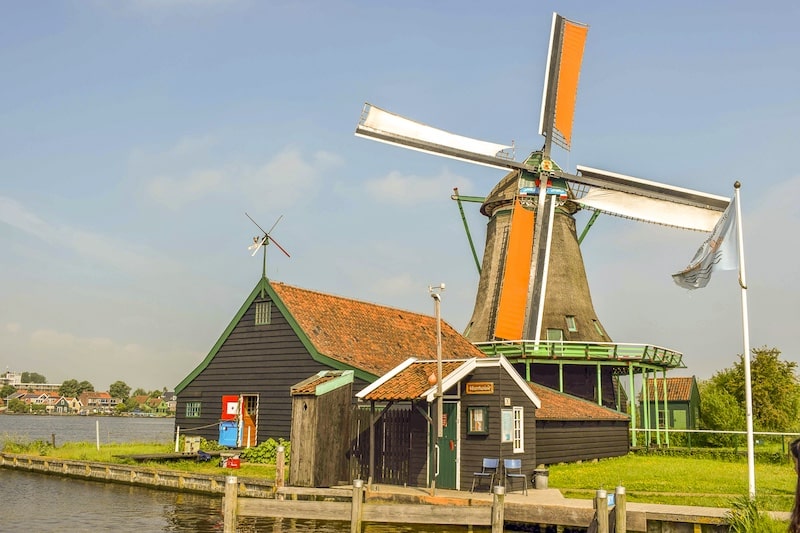
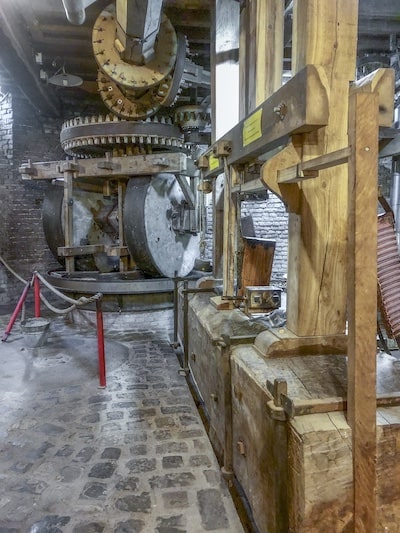
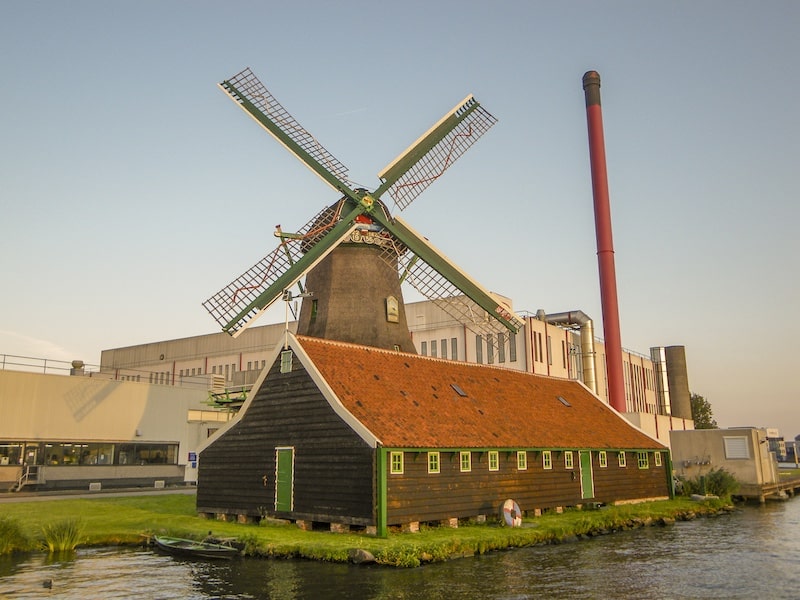
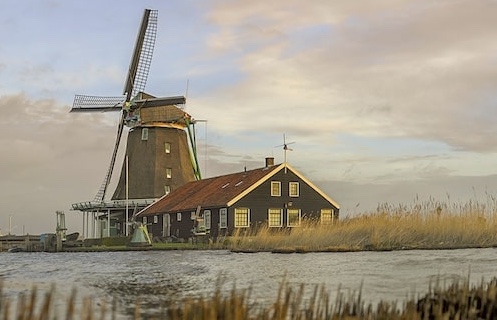
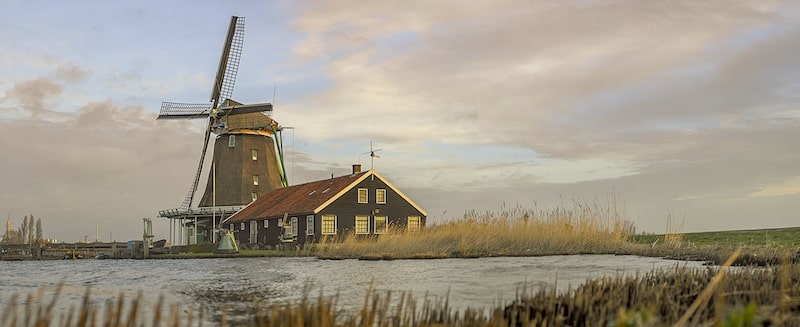
De Zoeker oil mill was built in 1673. In 1925 the mill, standing in the open field near Zaandijk, was hit by a tornado. Thus, yet another mill was in danger of disappearing. In an attempt to save the mill, mill enthusiast Frans Mars called on Zaankanters to join together. Two weeks later, the De Zaansche Molen association was a fact and the mill was saved.

Oliemolens.nl - De Zoeker - Zaandam

From oil to cocoa waste

The Seeker has had various functions. Of course, as an oil mill for a very long time. After 1891, Dezoeker was converted into a paint mill. In 1912 the mill was also used for grinding shells and processing cocoa waste. This did not last long because in 1914 oil was struck again with the inner workings of the Wheel of Adventure. Until a tornado paralyzed the mill in 1925.

Oliemolens.nl - De Zoeker - Zaandam

World news

In 1968 the mill had to make way for a new residential area. A spectacular move to the Kalverringdijk on the Zaanse Schans followed. The move became world news, because the mill body was lifted in its entirety over the track. An Urban Legend has it that the two millwrights Nico Maas and Gerrit Smit had been inside the body and watched from behind a window!

Oliemolens.nl - De Zoeker - Zaandam

Peanut oil

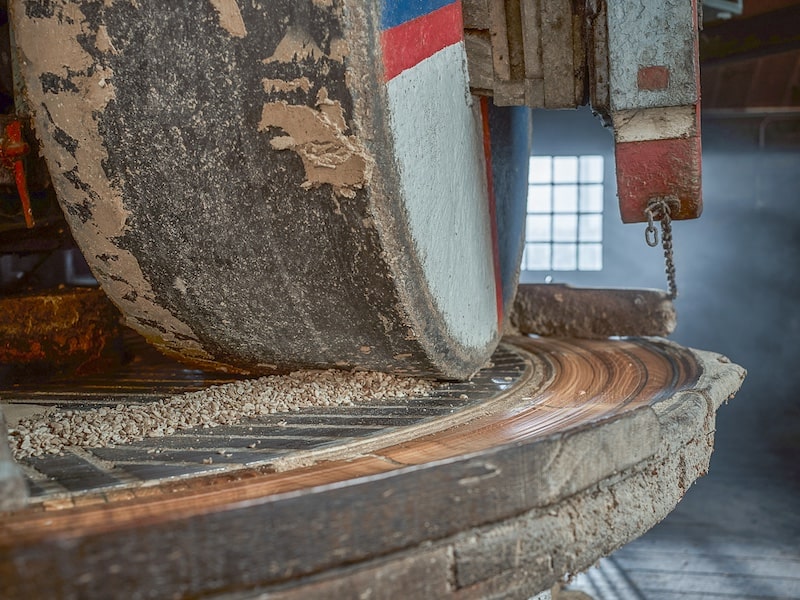
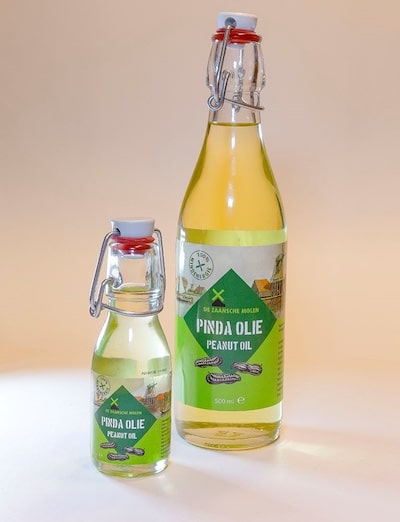
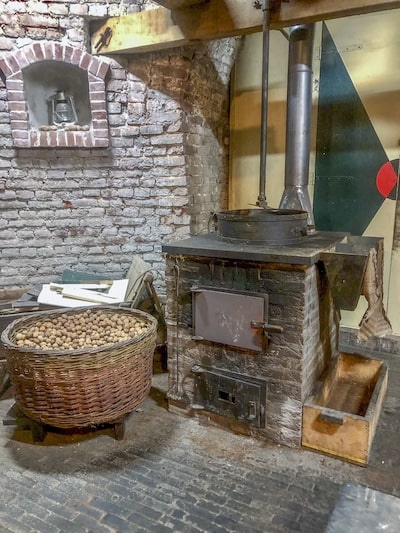
Peanut oil is now minted almost every day at tDe Zoeker mill. This peanut oil, or arachis oil, is processed into consumer oil. This clear peanut oil has a high boiling point and is therefore ideal for stir-frying, baking and frying. Perfect for sauces, mayonnaise and dressings. Of course for sale at De Zaansche Molen.

Oliemolens.nl - De Zoeker - Zaandam

Address
Kalverringdijk 31
1509BT Zaandam
The Netherlands

Website
De Zaansche Molen – De Zoeker

Oliemolens.nl - Het Pink - Koog aan de Zaan

Het Pink – English

Oliemolens.nl - Het Pink - Koog aan de Zaan

Het Pink

The oldest parts of the Het Pink oil mill in Koog aan de Zaan probably date from 1620. The original rocking mill was replaced in 1751 by an octagonal mill, which was placed on the original bottom square. Until 1931, Het Pink operated on wind power. After the death of owner Adriaan Honig in the same year, the mill stood still and fell into disrepair.

Oliemolens.nl - Het Pink - Koog aan de Zaan

In 1939 the mill was donated to De Zaansche Molen. The Gebroeders Husslage mill factory immediately started the restoration, the first major mill restoration in the Zaan region. After the official opening in September 1939, the mill was converted into a museum mill.

The mill would be opened for the first time on May 10, 1940. Especially for the opening, Frans Mars (founder of the association) had exhibited some of his work in the mill, and it was also decided to put the Pink in the traditional bridal dress for this occasion. The mill was decorated on May 8 and 9. The outbreak of the Second World War threw a spanner in the works and on May 10, the beautifully decorated mill was hastily stripped of its decoration.

Oliemolens.nl - Het Pink - Koog aan de Zaan

Planting seeds for future millers

Het Pink has an extensive history for the association. In addition to oil minting and receiving visitors, millers are also trained and there is a carpentry club for youth members. Here a seed is planted for future millperch (m/f). Youth education projects have also taken place in this special mill for many years. Like Kind in 1945, who asked the millwrights if they came to work in their wooden shoes.

Oliemolens.nl - Het Pink - Koog aan de Zaan

Address
Pinkstraat 12
1541HD Koog aan de Zaan
The Netherlands

Website
De Zaansche Molen – Het Pink

Oliemolens.nl - De Bonte Hen - Zaandam

De Bonte Hen – English

De Bonte Hen

Oil mill De Bonte Hen was probably built in 1693 on the spot where a sawmill named ‘t Hentje had previously stood. The mill still stands at that location on the Kalverringdijk on the Zaanse Schans.

Oliemolens.nl - De Bonte Hen - Zaandam

From oil to cocoa

Since 1846, the Bonte Hen was owned by the company T. Crok from Koog aan de Zaan. Until 1912, the company used the mill as a test mill to determine how much oil a particular batch of seed contained. If the yield was sufficient, the batch was purchased and fully processed in the De Engel steam oil extracter. After 1912, the mill was rented out and mainly cocoa butter was minted.

Oliemolens.nl - De Bonte Hen - Zaandam

In 1924 a diesel engine was installed in the mill and from 1927 the blades stopped working for good. The now dilapidated mill was demolished in 1935. The barn and basement remained and served as a warehouse. In 1973, the dilapidated mill barn and substructure were purchased by De Zaansche Molen. The Bonte Hen was then completely rebuilt and restored. The official commissioning followed in 1979.

Oliemolens.nl - De Bonte Hen - Zaandam

This mill is currently open almost every day (slightly less in winter) and Jippe Kreuning is the head miller. He also has his sail making workshop in the attic of the barn. A beautiful craft.

Address
Kalverringdijk 39
1509 BT Zaandam
The Netherlands

Website
De Zaansche Molen – De Bonte Hen

Oliemolens.nl-Holten's Molen-Deurne

Holten’s Molen – English

Holten’s Molen

Holten’s Molen in Deurne is a mill with three functions that was and is still used as a small-scale village business. Milling is done for bakers, families and mill shops, and oil is minted for painters of wood and metal. And trees are sawn in the sawmill to be processed into benches and tables. The mill used to belong to the Holten family and since 1993 it has belonged to a foundation with about 25 volunteers.

Oil mill history

A few years after the construction of the mill in 1890, Louis Holten, builder-owner, took over the furnishings of the oil mill from the estate of a water mill in Horst. This was placed at the bottom of the mill. After a short interruption, the oil work was in use until 1940. The drive was then also provided by a Deutch engine. After 1945 the oil work was demolished. An edge stone  was placed against the belt. In the early 1950s, milling also stopped and the sawmill continued. The mill fell into disrepair and the municipality even applied for a demolition permit in 1989.

Oliemolens.nl-Holten's Molen-Deurne

Restorations

A number of mill enthusiasts then bought the mill from the municipality in 1993 to renovate it and turn it into a working mill in the state of 1900. When it reopened in 1998, grinding and oil extraction brought the mill back to life. . Some parts of the old oil mill have been reused. The tracks in the mill and the remains of the old oil mill were the basis for the reconstruction. The beating bench and edge stones came from the Wanroy horse mill and were indispensable. It is a simple farmer’s percussion.

Oliemolens.nl-Holten's Molen-Deurne

Volunteers

The employees of the various activities of Holten’s Molen are all volunteers: board members, the milling team, the oil extracters, shop ladies, the sawyers and the volunteers for educational purposes. Almost everyone can help with other activities. This allows e.g. excursions for young and old with varying guides and millers are carried out. The explanation and demonstration of oil striking is an important part of this. This way the stories about the old technology come back to life. The production of linseed oil is carried out on a few days during the week. This can be done with an auxiliary motor or with the wind.

Oliemolens.nl-Holten's Molen-Deurne

Address
Veldstraat  39
5751AA Deurne
The Netherlands

Website
Holtens Molen

Oliemolens.nl-Watermolen 't Coll - Eindhoven

Watermolen ‘t Coll – English

Watermolen ‘t Coll

Watermolen ‘t Coll is located on the Kleine Dommel, on the border between Eindhoven and Nuenen. Centuries of impoundment of the water by the millers has created a unique nature reserve upstream. The gradient at the mill is approximately 1 meter. The mill still has the  Molenrecht or stowage right.

Watermolen ‘t Coll consists of two mill buildings, each with its own function, a flour mill and an oil mill. The first mentions of the water mill go back to the 14th century. The wooden furnishings of the flour mill have always been preserved. In 1977, the flour mill was put back into operation on the initiative of Piet van Bussel and his son Edwin.

Oliemolens.nl-Watermolen 't Coll - Eindhoven

Vincent van Gogh

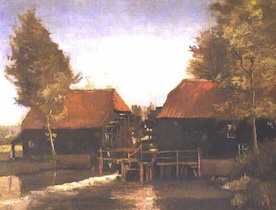
The oil mill had lost its function for more than 100 years. The oil percussion has also disappeared. In 1999, the oil mill building was restored thanks to subsidies from the municipality of Eindhoven and the EU. The mill building was again equipped with a water wheel and a red roof. The oil mill was given the appearance as seen in the painting by Vincent van Gogh.

Oliemolens.nl-Watermolen 't Coll - Eindhoven

Disappeared horse mill in Vlaanderen

In 2003, after technical elaborations by P. van Bussel and various subsidies, an oil percussion unit could be installed again. The work was carried out by millwright Beijk. The edge stones and the stone of the deathbed come from a disappeared horse mill in Vlaanderen. Before the new oil hammering equipment could be installed, a large number of foundation piles were driven at the locations of the collet gangway and hammer bench.

Oliemolens.nl-Watermolen 't Coll - Eindhoven

Address
Collseweg 3 – 5
5641JN Eindhoven (Tongelre)
The Netherlands

Website
Watermolen ‘t Coll

Oliemolens.nl - Windlust - Nederweert

De Windlust – English

Oliemolens.nl - Windlust - Nederweert

De Windlust

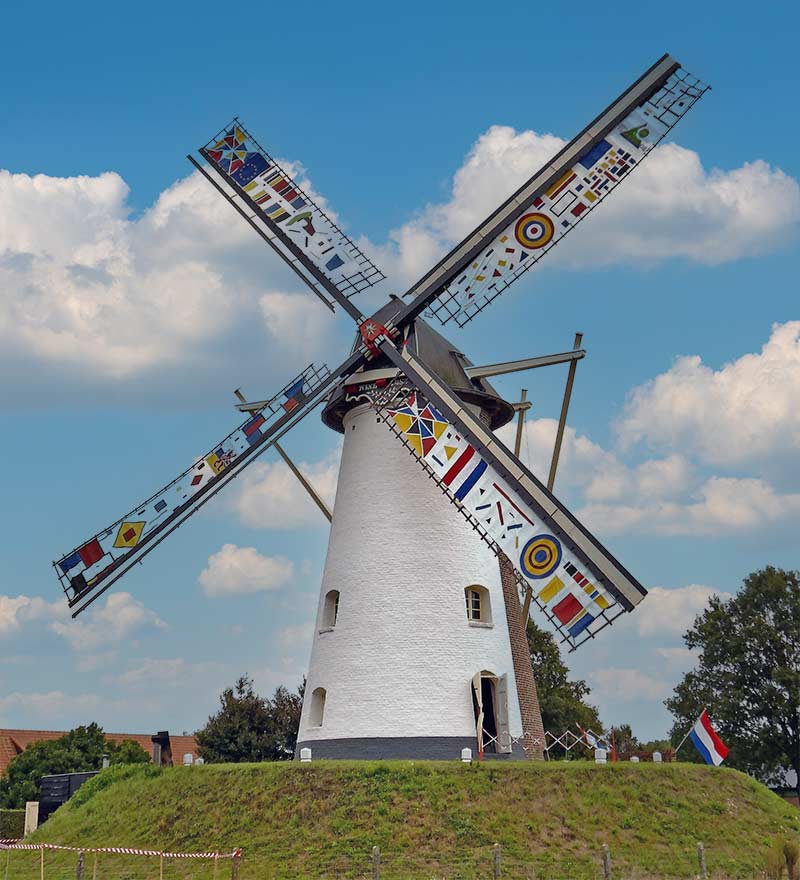
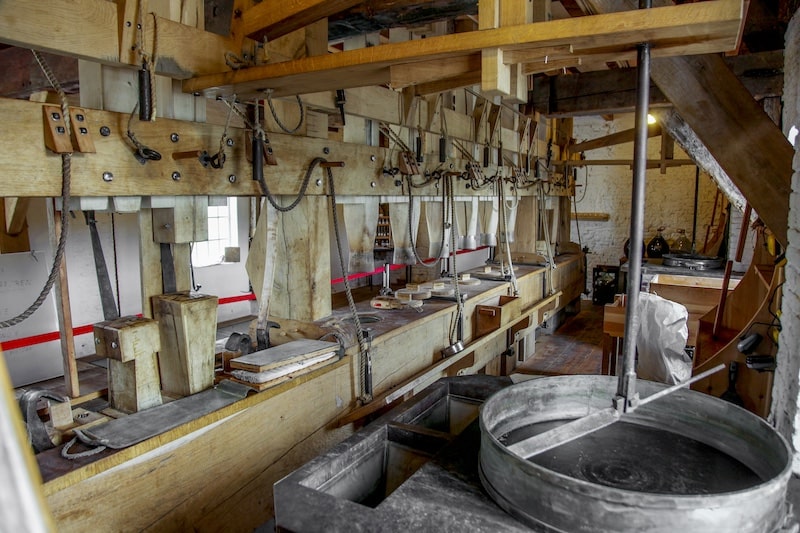
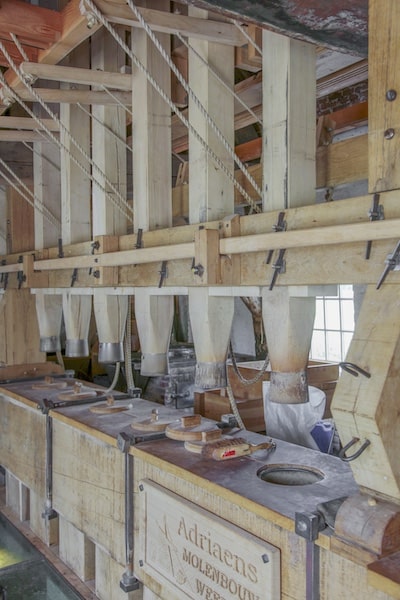
De windmill was founded in 1872 by Jacobus Bruekers in Nederweert, after which the mill successively fell into the hands of Martinus Bruekers from about 1880. The fact that this mill is still there, or rather, is standing again, is actually a miracle. On October 5, 1944, the mill was virtually destroyed after it was set on fire by a German shock troop. The remains of the interior were removed in 1947. What remained was a burnt out and damaged hull.

Nothing seemed to happen to this disfigured mill remnant until it became the property of the Nederweert notary J.M. Stassen. He had the mill restored at his own expense between 1979 and 1993, thus putting an almost lost monument back on the map. That meant a lot. Not only the stone hull had to be thoroughly restored, with the exception of the upper axle, everything is actually new.

Oliemolens.nl - Windlust - Nederweert

From black to white

In the autumn of 2009, work began on the reconstruction of the oil hammer on the ground floor of this mill, based on what was found during excavations in the mill. This is done in close collaboration between the Adriaens mill and several technical schools in the region. In the summer of 2011 this work was ready for use.

In 2010 the mill hull was partially whitened. It was once completely tarred black. In the spring of 2022, both rods were lowered for inspection and the mill received a new tail beam.

Flags colored by children

When the sails on the blades were over 30 years old there were a few holes in them. Schoolchildren from the area colored flags attached to the sails with the colorful and unique result as you can see in the top photo on this page.

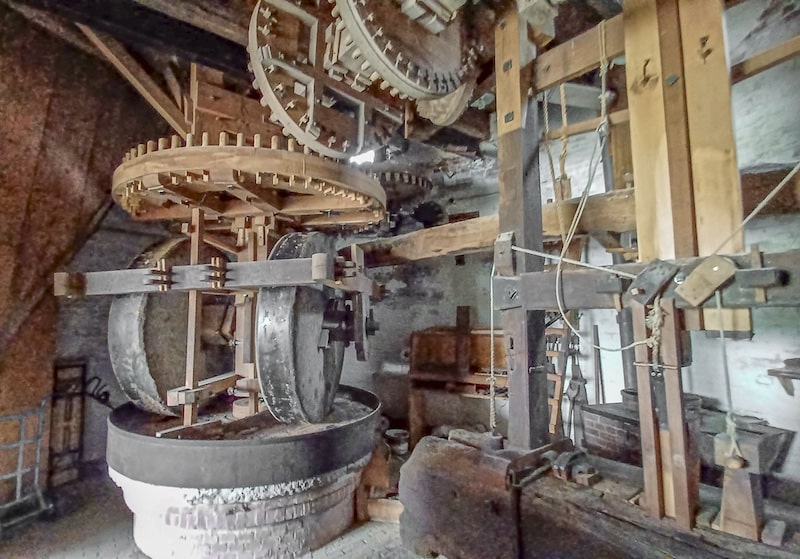
Mill The Windlust is the only windmill in Limburg that produces oil and is therefore unique in its kind. The conveyor belt and hammer bench with which this is done are in use more often. Millers show visitors around and let everyone experience how the oil extracter used to work with his impressive machine.

Oliemolens.nl - Windlust - Nederweert

Address
Roeven 14
6031RN Nederweert
The Netherlands

Website
Molendatabase

Oliemolens.nl - De Ooievaar - Zaandam

De Ooievaar – English

De Ooievaar (stork)

De Ooievaar is one of the four oil mills of the De Zaansche Molen association. This oil mill, which has been in its current location since 1669, has a long history. In 1955, the dilapidated mill came into the possession of the association. After a thorough restoration, the mill was put back into use to demonstrate and preserve the oil-mining craft.

For many years now he has been proudly staring across the water of the Zaan at his neighbor across the street in Zaandijk: the flour mill De Bleeke Dood. Now that he plays regularly, it seems as if he wants to say: ‘That’s your name, dear neighbor, but I’m far from it!’

Oliemolens.nl - De Ooievaar - Zaandam

De Ooievaar wordt verplaatst

De Ooievaar was originally built in 1622 as an oil mill in Assendelft, but moved to its current location in 1669. This mill has stood proudly in the Zaan landscape for centuries, but is now surrounded by the Duyvis factory. The past and future side by side.

This means that access over public land is not possible. In 2015, after winning the mill prize, the harbor and crane corridor were brought back and the mill was completely restored again. Now there is the possibility to reach the mill via the water.

Oliemolens.nl - De Ooievaar - Zaandam

Grinding of shells and processing cocoa waste

In addition to oil beating, the mill has also been used for grinding shells and processing cocoa waste. Now oil is extracted from linseed again. During the last restoration, the original oil cellars were restored. Not enough oil is minted to actually use it. Fittingly, Saendijck Windmill Factory is located in the mill barn.

Oliemolens.nl - De Ooievaar - Zaandam

Address
Diederik Sonoyweg 19
1509BR Zaandam
The Netherlands

Website
De Zaansche Molen – De Ooievaar

Oliemolens.nl - Molen De Hoop - Oldebroek - Logo

Molen De Hoop – English

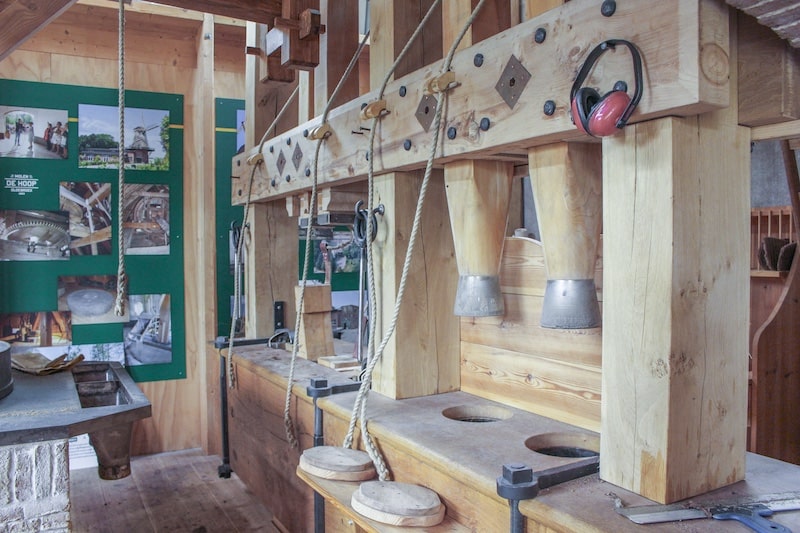
Molen De Hoop

Oliemolens.nl - Molen -De Hoop - Oldebroek

Flour mill, peel mill and oil mill

Molen De Hoop in Oldebroek is the only mill in the Netherlands with the function of Flour mill, peel mill and oil mill. Built in 1853 by Kornelis Blaauw. The oilworks were decommissioned around 1900 and the mill was no longer in use from the 1950s onwards. The arrival of diesel and electric engines meant that there was no longer any dependence on the wind.

Oliemolens.nl - Molen De Hoop - Oldebroek

Princess Beatrix

The interior of the mill has been restored since 2011. And in 2016, De Hoop was officially reopened by Princess Beatrix, in her role as patroness of the De Hollandsche Molen Association.

Oliemolens.nl - Molen De Hoop - Oldebroek

Edge stones

The oil work has been rebuilt as of 2019. The edge stones that were previously used in the outbuildings to make feed in the cattle feed mixing company were lying at the back of the garden waiting for reuse. And it worked.

Oliemolens.nl - Molen De Hoop - Oldebroek

Address
Zuiderzeestraatweg 252
8096CJ Oldebroek
The Netherlands

Website
Molen De Hoop

Oliemolens.nl - Rosmolen te Zieuwent - Arnhem- Logo

Rosoliemolen te Zieuwent – English

Oliemolens.nl - Rosmolen te Zieuwent - Arnhem

Rosoliemolen te Zieuwent

Antony Krabbenborg and son-in-law Harmen Harbers founded the mill in 1841. The mill stood in the yard of their farm ‘Groot Tilder’ in Zieuwent. The family also owned a windmill and  wealthy enough to make this investment.

After the division of the wastelands in 1832, the livestock in Zieuwent grew steadily. Turnip and line cakes were the only concentrated food available until the early twentieth century.

Due to the decline of the oil mills, petroleum was introduced instead of rapeseed oil, artificial fertilizer made it possible to grow other, more profitable crops and it was possible to purchase rapeseed cake from elsewhere via Boerenbond in Zieuwent.

Oliemolens.nl - Rosmolen te Zieuwent - Arnhem

Dutch Open Air Museum

In 1934 the horse mill was moved to the NOM (Dutch Open Air Museum). There it has been shown to visitors as a ‘silent presentation’ in its original state for more than 70 years. In 2003 it was decided to bring the mill back to life. Mill maker Vaags made a replica of the original and a new concrete foundation was placed under the impact block to absorb all the vibrations.

Oliemolens.nl - Rosmolen te Zieuwent - Arnhem

A-location in the NOM

The horse mill is now a so-called prime location in the NOM. Every day in the summer and winter season it is staffed by oil extracters who keep the craft alive and tell the story of the farmer’s oil mill. The oil is sold in the museum shop and the cakes are given away to visitors. With 550,000 visitors per year, a significant number of whom visit the horse mill, the craft is truly living history.

Oliemolens.nl - Rosmolen te Zieuwent - Arnhem

Address
Hoeferlaan 4
6816SG Arnhem
The Netherlands

Website
Rosoliemolen te Zieuwent

Oliemolens.nl - Olie- en korenmolen Woldzigt - Roderwolde (Noordenveld)-Logo

Olie- en korenmolen Woldzigt – English

Olie- en korenmolen Woldzigt

The location for the mill is mainly determined by the existing port of Roderwolde. Right opposite the harbor, the mill was built in 1852 and converted into an oil mill by millwright Jan van der Heide from Leek. The clients were the two brothers-in-law Datema and Aukema.

Thanks to the port, the supply of raw materials (line saw and later the grains to be milled) and the removal of the products could be ensured at this (as yet illogical location).

The eye-catching building was occupied by the miller in the right wing and by the mill hand in the left wing.

Oliemolens.nl - Olie- en korenmolen Woldzigt - Roderwolde (Noordenveld)

Platten

On the miller’s side, under the floor of the so-called “platten”, 4 tiled oil cellars have been created, each with a capacity of 20,000 liters. These are interconnected and the oil produced in the deposit flowed directly into these cellars. There was a wooden pump in each cellar for later pumping up the oil.

A year after the foundation of Woldzigt (after the correct permit had been obtained), a pair of millstones was placed.

Oliemolens.nl - Olie- en korenmolen Woldzigt - Roderwolde (Noordenveld)

Steam locomotive

In order to be able to produce even when there is no wind, a Deutz petroleum engine was installed around 1902. This was replaced around 1906 by a steam locomobile, followed in 1918 by a Heinrich Lanz locomobile. In old photos the chimney can still be seen behind the left wing of the mill complex.

From 1902 to 1919, the mill was owned by Jan Rietema from Leens, who acquired it at an auction.

Oliemolens.nl - Olie- en korenmolen Woldzigt - Roderwolde (Noordenveld)

Coöperatieve Zuivelfabriek Roden-Zevenhuizen

In 1919, the Coöperatieve olieslagerij korenmalerij Woldzigt G.A. owner of the mill. Master servant Jan Faber became the manager at this time. In 1941, the oil mill was closed by order of the occupying forces and production was taken over by Unilever.

In 1945 the mill was taken over by the Coöperatieve Zuivelfabriek Roden-Zevenhuizen. Jan Faber was succeeded by Frederik van der Velde, who had worked at the mill since 1925. He was manager until October 31, 1961. In 1945 (when the Cooperative took over the mill) an electrically driven grinding chair with under-drive was placed at the bottom of the mill and the steam engine was demolished. Later this electric motor was also used to drive the oil stroke.

Oliemolens.nl - Olie- en korenmolen Woldzigt - Roderwolde (Noordenveld)

Enthusiastic volunteer millers and oil extracters

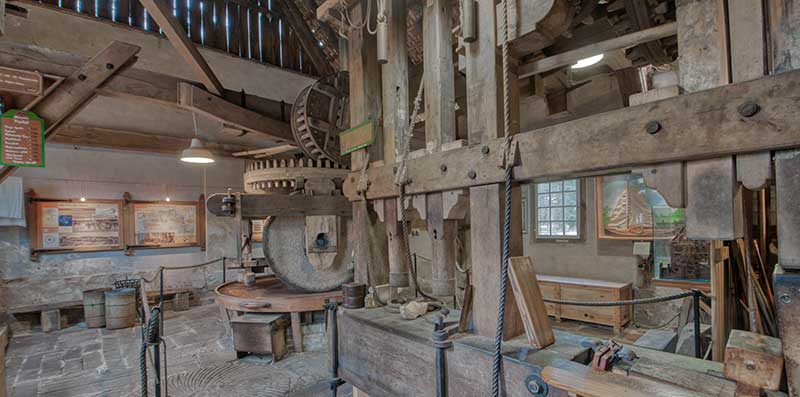
Every first Saturday of the month and on special days, such as National Mill Day, Drenthe Mill Day and Open Monument Days, oil is still minted in Woldzigt by a group of enthusiastic volunteer millers and oil extracters. When there is insufficient wind, the old electric motor still performs its task.

The interior is still largely as it was built in 1852.

Address
Hoofdstraat 58
9315PC Roderwolde
The Netherlands

Website
Olie- en korenmolen Woldzigt

Oliemolens.nl - Oliemolen De Passiebloem - Zwolle - Logo

De Passiebloem – English

De Passiebloem (passionflower)

In 1775/1776, De Passiebloem oil mill on the Nieuwe Vecht was built by millwright Derk van Dam on behalf of Jeremias Frederik Abresch and Jan A. Ledeboer.

At the end of the 18th century, the De Hoop, De Fortuin and Aloe mills stood on the west side of the Nieuwe Vecht, and the Passiebloem and Roode Molen mills on the east side. Now only the Passion Flower remains of this oldest industrial area.

Oliemolens.nl - Oliemolen De Passiebloem - Zwolle

Preface and reference

The Passionflower is a thatched wooden octagon on a barn. In the barn you will find the oil factory, the wood store, a workshop and a small shop. The oil factory has a reference and a reference, both of which are still used. There is also a working model of an oil extracters shop. The original oil cellars have been preserved under the barn. In the past, the oil was stored here until the selling price was right.

The restoration

In 1932, the municipality of Zwolle purchased the land on which De Passiebloem stood and had the mill restored by unemployed people. The restoration was completed in 1937. The mill was then rented (again) to N.V. Reinders oil and feed factories.

The mill was restored in 1985 and continued to operate for the prince until October 1998. Since then, oil has been mined on a regular basis again by a group of enthusiastic volunteers. In connection with the wishes of a large customer of line cakes, the mill recently also has a cake crusher, currently only powered by manual power.

Address
Vondelkade 175
8023AD Zwolle
The Netherlands

Website
De Passiebloem

Oliemolens.nl - De Kilsdonkse-Molen - Heeswijk - Dinther

De Kilsdonkse Molen – English

De Kilsdonkse Molen

De Kilsdonk mill has a long history. One that goes back to the Middle Ages. The main propulsion is water. Possibly, which almost never happens, it can also be driven by wind.

Oliemolens.nl - De Kilsdonkse Molen - Heeswijk-Dinther

The origin

Originally, De Kilsdonkse Molen consisted of two water mills. Only later did the unique combination of a water escape mill with a water mill emerge.

One mill equipped with a sail cross and water wheel and the other only with a water wheel: a corn and oil mill respectively.

The entire complex was destroyed by fire in 1842 and rebuilt in its current form that same year. In 1880, both water wheels were removed and corn could only be milled using wind power, after which it fell into disrepair.

The oil mill served as a home until 1954 and as a mill for the flour and corn trade of the Potters family until the end of the 20th century.

Oliemolens.nl - De Kilsdonkse Molen - Heeswijk-Dinther

Back in full glory

When research showed that it was possible to restore the mill to its original state, the mill came back to life. The restoration and reconstruction started in 2003, after which HRH Prince Johan Friso put the unique water escape mill into operation on May 8, 2009. Since then, the Netherlands and Europe have gained a unique mill complex with a visitor center.

Oliemolens.nl - De Kilsdonkse Molen - Heeswijk-Dinther

Address
Kilsdonkseweg 4-6
5473KK Heeswijk Dinther
The Netherlands

Website
De Kilsdonkse Molen

Oliemolens.nl - Koren en Oliemolen de Phenix - Nes - Ameland - Logo

Koren- en Oliemolen ‘De Phenix’ – English

Koren- en Oliemolen ‘De Phenix’

Oliemolens.nl - Koren en Oliemolen de Phenix - Nes - Ameland

History

The predecessor of De Phenix was the De Hoop mill, which burned down in 1880 as a result of a lightning strike. That same year, the owner, Jan Pieters Boelens, had a new mill built by the mill builder Van der Meer brothers from Harlingen. This mill was given the name ‘Phenix’ (resurrected from the ashes).

The mill was built in 1880 on an elevated site on the north side of Nes. The mill is located on historic land, it has been 400 years since a patent was applied for to build a mill on this site. This octagonal top mill is the only ground sailor in Friesland and is also the northernmost mill in the Netherlands. The mill has been open to the public again since 1984.

Oliemolens.nl - Koren en Oliemolen de Phenix - Nes - Ameland

Conversion into the Phenix flour and oil mill

It soon became apparent that the mill was actually too small to be in operation and open to the public at the same time. In 2018 and 2019, the Phenix mill in Nes was thoroughly overhauled by ‘De Molenmakers’ from construction company Hiemstra from Tzummarrum. The mill was thoroughly restored and then thatcher Kleinjan from Den Ham provided the hull and hood with a new thatched roof.

Oliemolens.nl - Koren en Oliemolen de Phenix - Nes - Ameland

Underground visitors center

The second phase of the mill’s revitalization was the construction of an underground visitors center on the east side of the mill under the Mullesduun. The Molenmakers installed an oil mill in this underground part. Oil has been minted in Koren- en Oliemolen de Phenix since the beginning of 2022.

Oliemolens.nl - Koren en Oliemolen de Phenix - Nes - Ameland

On Tuesdays and Saturdays, when there is sufficient wind, oil is struck in the mill. For delicious artisanal oil and other mill products, you can visit the mill shop.

Address
Molenweg 10
9163HP Nes (Ameland)
The Netherlands

Website
Amelander Musea

Oliemolens.nl - Achterhoeks Openluchtmuseum (Erve Kots) - Lievelde - Logo

Achterhoeks Openluchtmuseum (Erve Kots) (open air museum) – English

Achterhoeks Openluchtmuseum (Erve Kots) (open air museum)

Rosmolen Erve Kots

Unique appearance

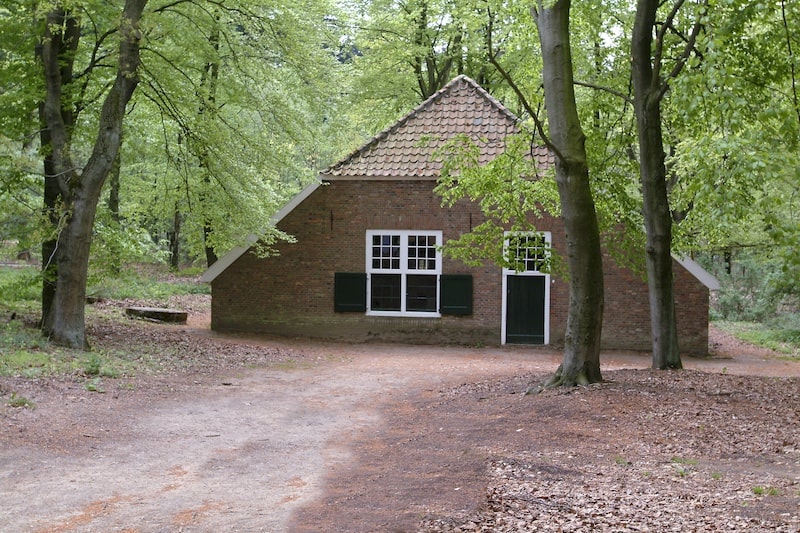
The Rosmolen Erve Kots is a unique appearance in the Erve Kots open-air museum in Lievelde. Initially this mill was used as a grist mill and was located on the farm of S.J.J. Geesink in Lievelde. However, later a fully intact oil mill appeared in the shed of G.J.J. Geesink in Lievelde.

The driving gear of this oil mill was acquired by the former owner, G.J. Weenink van Erve Kots, when the barn was to be converted into a cattle shed. In 1963, the driving gear was transported to its new destination with great care. The building for the oil mill itself, beautifully constructed in half-timbered bricks, was not completed until 1968 and the driving gear was completed in 1972.

Rosmolen Erve Kots (01)

There is a stable in the mill for the horse

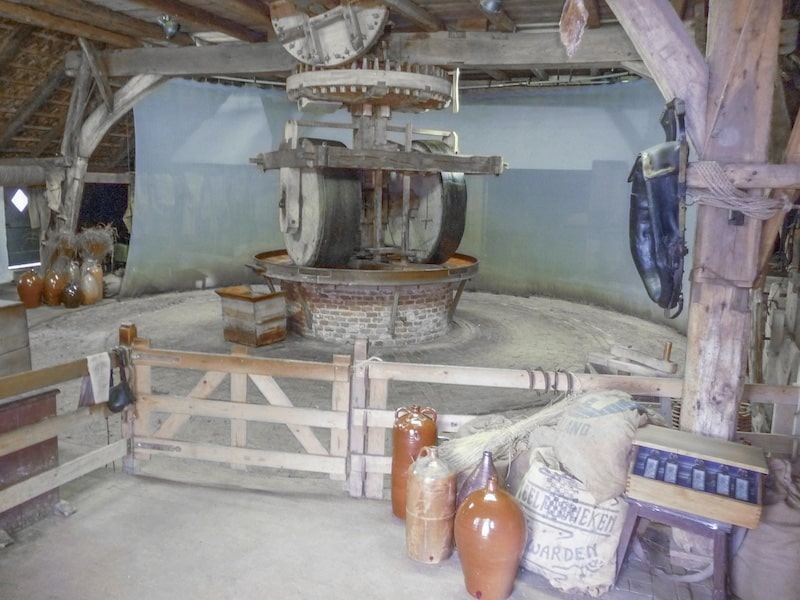
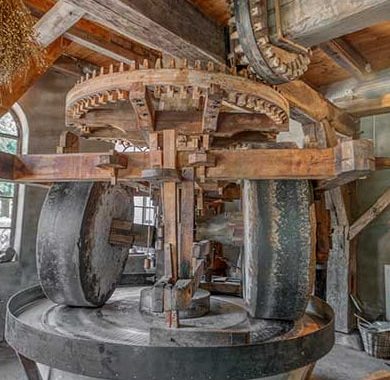
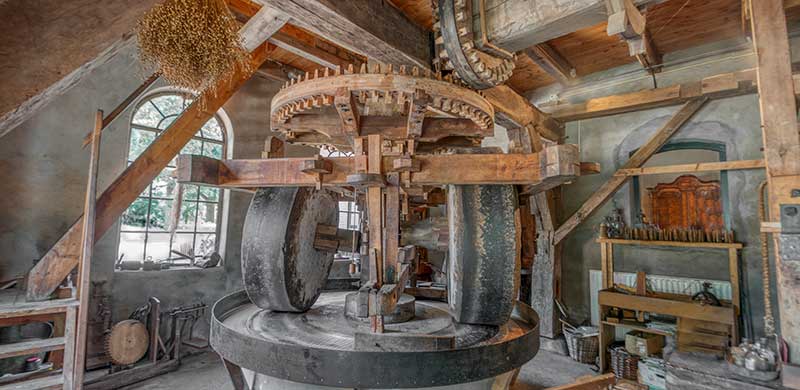
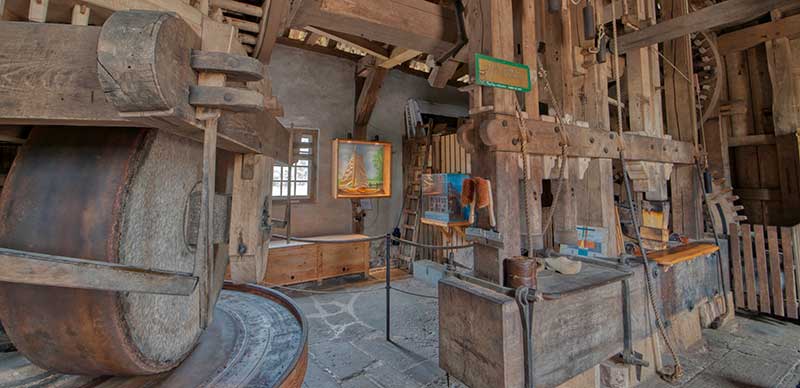
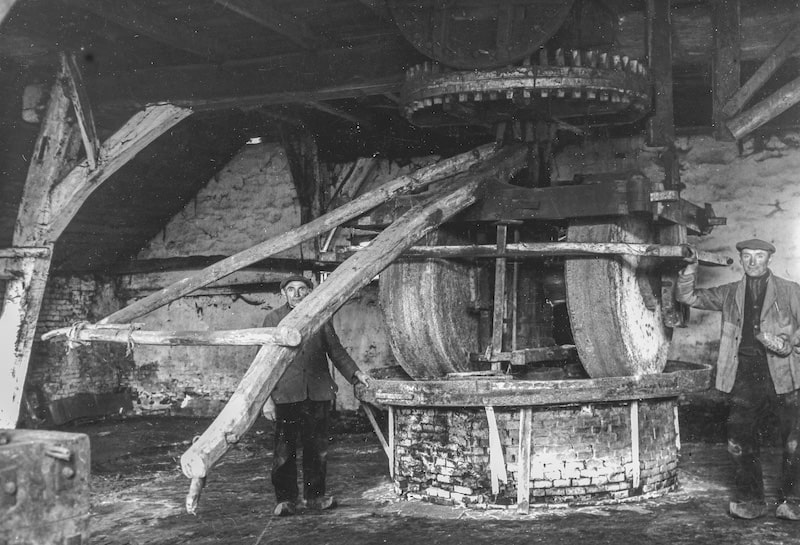
This mill has a deadbed with edge stones and a striking block with one loading. In addition, there is also a slam heath and a loose heath. However, this mill does not have a pestle. There is also a fist for heating the flour and a jaw for stripping the cookies. There is a stable in the mill for the horse.

Oliemolens.nl - Achterhoeks Openluchtmuseum (Erve Kots) - Kantstenen

Oliemolens.nl Achterhoeks Openluchtmuseum (Erve Kots) - Heien

Part of the museum

Nowadays, De Rosmolen Erve Kots can be admired as part of the museum. The Rosolie Mill is in operation on various Craft Days throughout the year.

More information can be found at:

Oliemolens.nl - Achterhoeks Openluchtmuseum (Erve Kots) - Slagbank

Address
Eimersweg 4
7137HG Lievelde
The Netherlands

Website
Achterhoeks Openluchtmuseum (Erve Kots)

De Leumolen – English

De Leumolen

History

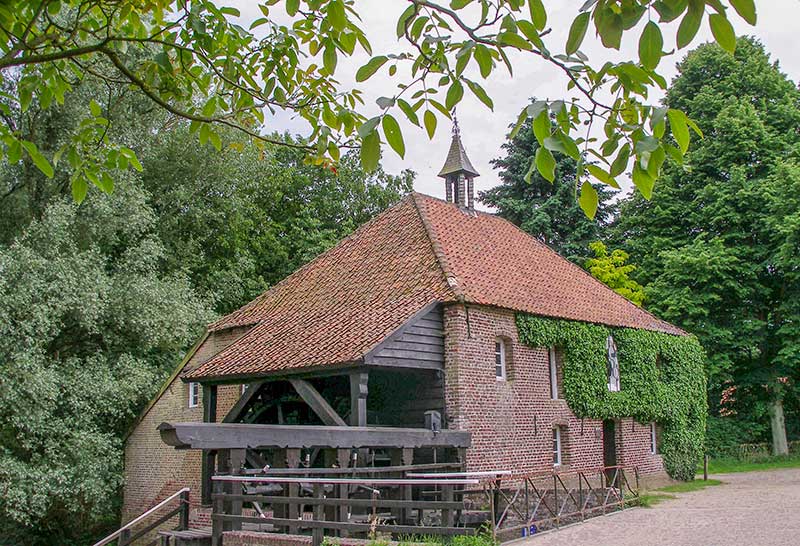
De Leumolen is located on the Leubeek in the Limburg nature reserve the Leudal: a water mill, with the function of a flour mill and oil mill. The oldest document mentioning ‘the mill on Loe’ dates from 1461, but the mill may be older. The mill at that time was a mud half-timbered building with only the function of a flour mill. Three centuries later, the water mill was now the property of the St. Elisabethsdal monastery, the ‘Loyer Mill’ was rebuilt in stone and expanded with an oil mill, the wall anchor year 1773 commemorates this event. The mill was purchased by Staatsbosbeheer in 1956.

Sint Ursulamolen

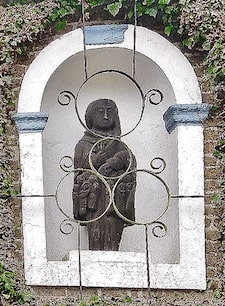
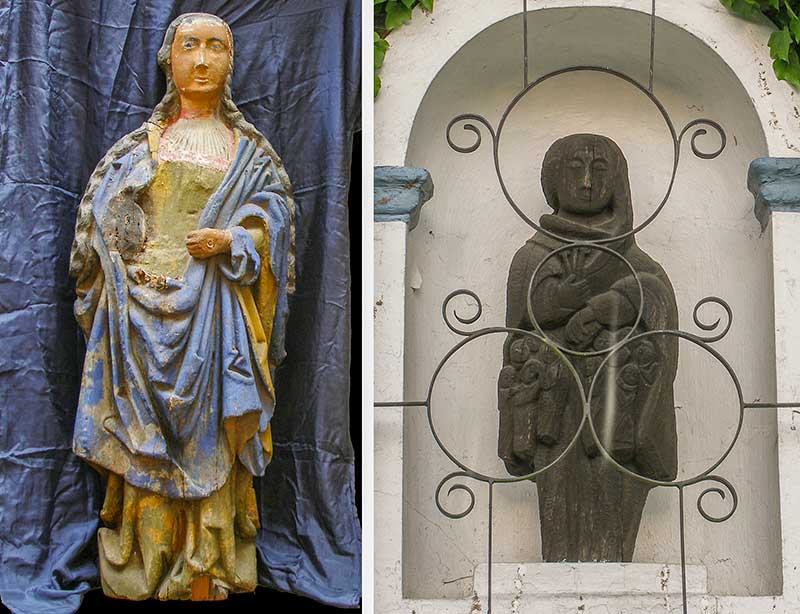
De Leumolen is also locally called St. Ursulamolen. The story goes that in 1796 the French occupiers threw a statue of St. Ursula, owned by the neighboring monastery, into the stream and that the Catholic saint subsequently washed up at the mill. Ursula was lovingly taken in and gave the mill her nickname. The patroness stands in a niche above the door. The original statue is located in the Historiehuis in Roermond. A new statue was installed in 1961 and was made by artist Eugène Eggen.
Functions

For centuries, De Leumolen was only a flour mill. During the major renovation in 1773, an oil mill was added, which remained in operation until the beginning of the 20th century. After restoration, oil has been minted again since 2008 and linseed oil is extracted from linseed. The Leumolen is the only water mill in the Netherlands that houses both a corn mill and an oil mill under one roof. In the 19th century, De Leumolen was also a mill where barley was ‘hulled’ into groats.

Address
Leumolen 3
6083BL Nunhem
The Netherlands

Website
De Leumolen

Oliemolens.nl - Oostendorper watermolen - Haaksbergen - Logo

Oostendorper water mill – English

Oostendorper watermolen

Oliemolens.nl - Oostendorper watermolen - Haaksbergen

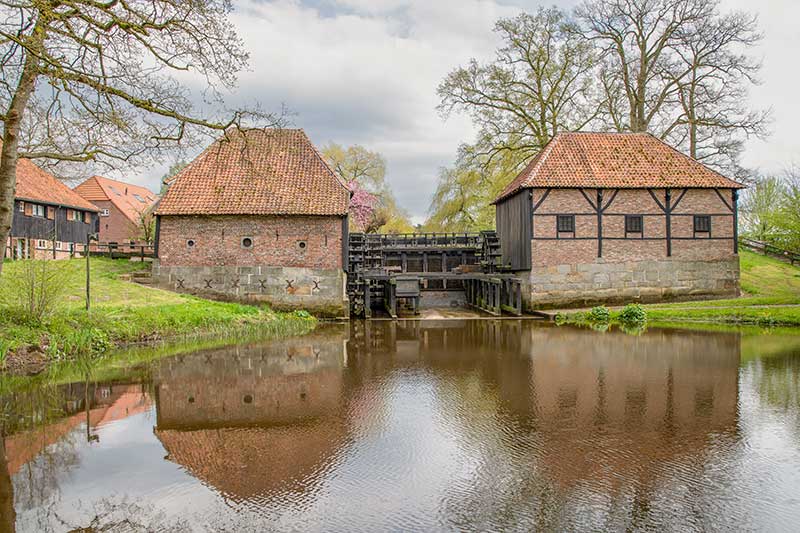
The current Oostendorper watermill has not always been in its current location. This mill was originally located between the Lankheterbrug and the Veddersbrug. This mill must have been built around 1400, after the Buurserbeek and the Vedde were connected through Deventer. Remnants of this mill were found during work there on the Buurserbeek in the 1920s and 1930s in the form of heavy oak beams.
Oostendorp

A report dated February 17, 1545 from the imperial commissioner Jan van Oostendorp regarding the domain goods in the Haaksbergen office states that the mill was in a very dilapidated state. That is why a new mill was built on the grounds of Oostendorp, the current location. On September 18, 1548, the first grain could be milled again. The oil mill could not yet be put into operation at that time, because the millstones were still missing; These may have been lost during transport from Deventer to Haaksbergen.

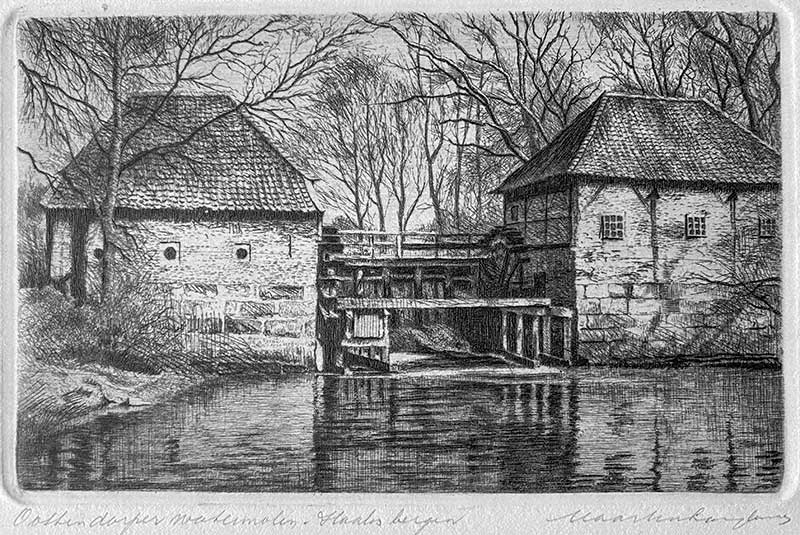
Over the years, the mills have fallen into disrepair and been rebuilt several times. In 1946, the oil mill was even completely washed away during heavy weather. Afterwards, architect Jan Jans rebuilt the mill in a romantic style. However, the doors were locked and decay soon set in.

Oliemolens.nl - Oostendorper watermolen - Haaksbergen

The last restauration

In the eighties, the (tourist) importance of the double mill was rediscovered and the mill was returned to its original state. On January 2, 1988, the mayor of Haaksbergen, Drs. J.D. Gabor, the last stone laid in connection with the restoration carried out.

The volunteers

Since that time, the mills have been run by a large number of enthusiastic volunteers who press oil and grind corn and sell their own products in a small shop.

Oliemolens.nl - Oostendorper watermolen - Haaksbergen

Address
Watermolenweg 3
7481VL Haaksbergen
The Netherlands

Website
Oostendorper Watermolen

Pelmolen Ter Horst – English

Pelmolen Ter Horst

In Twente, just outside Rijssen, on the river Regge, there is an octagonal tower mill on the De Pelmolen barn. Jan ter Horst built the mill in 1752. The Pelmolen became one of the three most important industrial mills in Twente.

History

On the ground floor in the oil mill, the millers made oil from rape and linseed. When the wind was favorable, they made barley groats on the third floor in the mill. The mill had a favorable location on the river and on the main cart path. This allowed the Pelmolen to supply products throughout the eastern Netherlands and as far as Groningen.

Production was stopped in 1913. One of the descendants, Hein ter Horst, founded the Pelmolen Ter Horst Foundation in 1973. The mill was completely restored and reopened to the public on October 16, 1975. Twente, but also the Netherlands, has gained another unique industrial mill. The foundation board currently has five members, including two descendants of Ter Horst. The millers, supported by the many volunteer millers, maintain and work with the mill.

When the wind is favorable you can see the oil mill in full operation. You will see the production process, how the force of the wind turns the gears to extract oil from the linseed at high pressure. The smell of warm linseed greets you as you enter.

Oliemolens.nl - Pelmolen Ter Horst - Rijssen

Address
Pelmolenpad 9a
7461PT  Rijssen
The Netherlands

Website
Pelmolen Ter Horst

Olieslaan.nl - Logo - Commissie Olieslaan

Contact – English

Contact

For contact and information about the individual oil mills, you can contact the relevant oil mill via the website of the relevant oil mill itself. For this, see Our locations.

For contact with the Olieslaan Committee, you can use the contact form below.

Olieslaan.nl - Logo

UNESCO – English

Miller’s craft on UNESCO’s intangible heritage list

On December 5, 2017, there was a party for the Dutch millers. The ancient craft of milling has been recognized by UNESCO as Cultural Intangible Heritage. A recognition for an old craft with a bright future.

“Intangible heritage is ‘living heritage’. It includes social customs, performances, rituals, traditions, expressions, special knowledge or skills that communities and groups (and sometimes even individuals) recognize as a form of cultural heritage. A special feature is that it is transmitted from generation to generation and is important for a common identity.”

Oliemolens.nl - UNESCO

Intangible Heritage

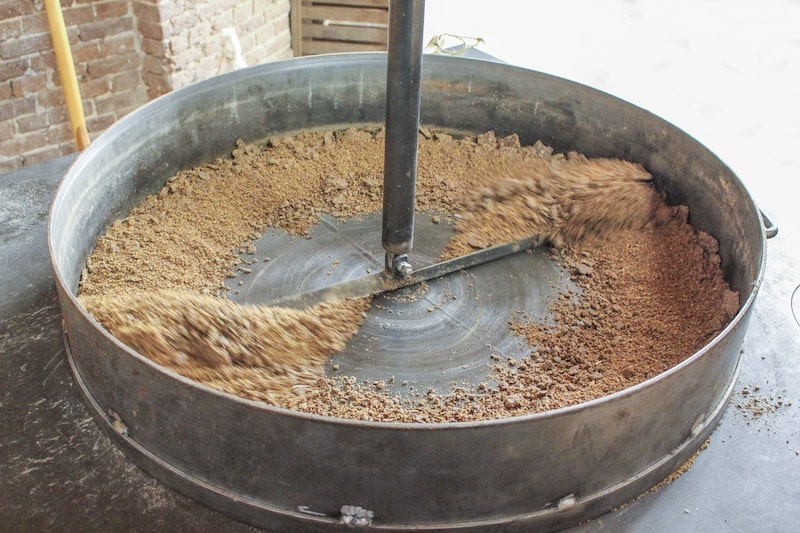
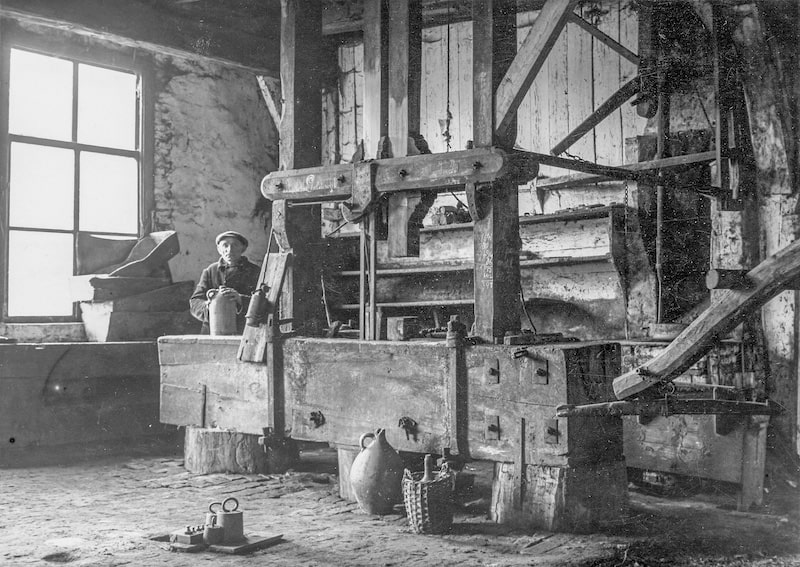
On December 6, 2023, the Olieslaan craft was registered in the Intangible Heritage of the Netherlands inventory. The millers and oil extracters are responsible for transferring the heritage. Volunteer millers play an important role in this, which means that the craft of oil milling has been classified as an intangible heritage. The craft of oil-mining is that intangible heritage.

Olieslaan - Immaterieel Erfgoed Nederland

A piece of history

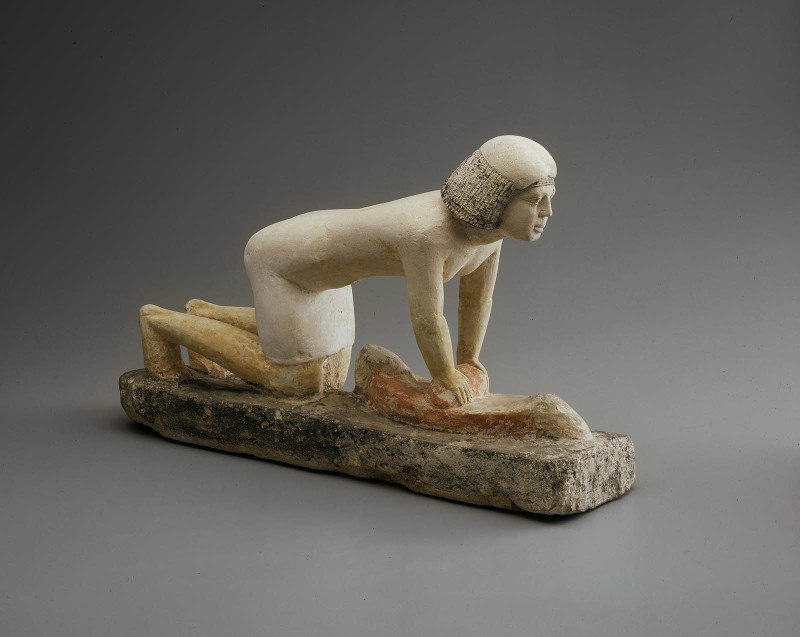
About 5,000 years ago, humans switched from hunting/gathering to agriculture. The grain was (usually) ground by hardworking women, for example by this Egyptian woman with a grinding stone.

Oliemolens.nl - Egypte - UNESCO

Limestone statuette from a tomb in Egypt of the 5th Dynasty of the Old Kingdom, 2465-2323 BC.

Around 6,000 BC, grain grains were rubbed finely between two stones. One stone was hollowed out, another stone was placed on top and the grains were crushed into powder. Derived from this is the hand mill that originated at the beginning of our era. The hand mill (queerne) or rotating mill consisted of two stones, round in shape. Here the grain was crushed between a fixed (lower stone) and a rotating (upper) millstone of approximately 30 cm in diameter. These stones are also called the girder and the bishop. The Roman invention of this dates back to the 1st century BC.

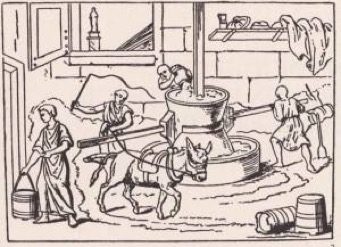
The development of wind and water mills already gave rise to a new profession in Roman times: that of mulder or miller. Mills powered by slaves or animals. When a horse or donkey was used, we started to speak of horse mills. The water mill came into operation in the Roman Empire and the work immediately became much easier.

The Romans contributed to the spread of the Roman Empire, which had its northern border, the Limes, up to the Rhine. It took several years before the water grain mills managed to gain a place next to the mills operated by slaves or animals. The slower spread of water wheel mills must be largely attributed to the fact that hand mills and horse mills could be placed anywhere, while – as far as water mills were concerned – they were always dependent on the presence of running water. In England, fragments of undershot wheels and complete millstones from three water mills from the 3rd century, possibly from the end of the 2nd century, have been discovered near Hadrian’s rampart, built by the Romans.

Water- wind- and horse mills

The development of wind and water mills already gave rise to a new profession in Roman times: that of mulder or miller. Mills powered by slaves or animals. When a horse or donkey was used, we started to speak of horse mills. The water mill came into operation in Rome and the work immediately became a lot easier.

Oliemolens.nl - Water - Wind en Rosmolens - UNESCO

The Greek geographer Strabo (64 BC – 20 AD) first mentions a water mill for grinding grain, which Roman soldiers are said to have seen in the palace of King Mithridates of Pontus (Anatolia, now Turkey). Roman engineers improved the scoop board, the cogwheel and the wheel that had to transmit the power to the axle of the millstone and thus the performance.

Oliemolens.nl - Watermolencomplex Barbegal - UNESCO - Schets
Oliemolens.nl - Watermolencomplex Barbegal - UNESCO - tekening

Barbegal water mill complex

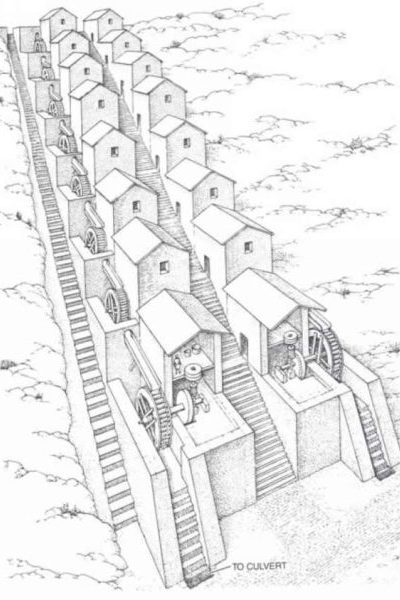
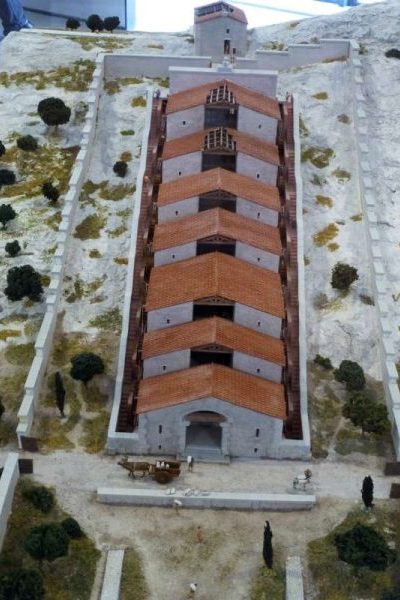
The Roman Empire needed a lot of grain to supply food for legionaries and cities such as Rome and Arlas. Near Arlas in France, archaeologists recently found the Roman ‘industrial’ water mill complex Barbegal, with 16 overshot wheels driving as many grinding stones. The flour mill made larger scale production possible with less human effort.

It was already known that the Romans were masters in what  we now call water management.

In February 2024, an article was published with beautiful illustrations about new discoveries about the complex at Barbegal, which you can read HERE.

Aqueducts with a gradient of 30 – 40 cm per kilometer,  bathhouses and lead pipes for drinking water. It is claimed that the collapse of the Roman Empire was caused by brain softening of the senators, who suffered lead poisoning.

After the water-powered grain mill was introduced, several techniques were developed over the centuries, both in terms of drive and products to be processed. This is how water mills were developed that we now know as tidal mills, ship mills, overshot and undershot mills. Water-powered mills were developed for all kinds of products, such as the saw mill, paper mill and oil mill; the same drive system for completely different operations.

Oliemolens.nl - Google Maps - Locaties

Our locations – English

Where are our mills located?

On this page you will find an overview per province and location of the locations where our windmills are located and you can easily navigate there.

Select a province

Brabant

Deurne – Holtens Molen

Address
Veldstraat  39
5751AA Deurne
The Netherlands

Website
Holtens Molen

Eindhoven – Watermolen ‘t Coll

Address
Collseweg 3 – 5
5641JN  Eindhoven (Tongelre)
The Netherlands

Website
Collse Molen

Heeswijk Dinther – De Kilsdonkse Molen

Address
Kilsdonkseweg 4-6
5473KK Heeswijk Dinther
The Netherlands

Website
De Kilsdonkse Molen

Drenthe

Roderwolde – Olie en korenmolen Woldzigt

Address
Hoofdstraat 58
9315PC Roderwolde
The Netherlands

Website
Olie- en korenmolen Woldzigt

Zuidlaren Museum De Wachter

Address
Bolwerk 11
9471AT Zuidlaren
The Netherlands

Address
Museum De Wachter

Friesland

Nes – Alexander Musea

Address
Molenweg 10
9163HP Nes (Ameland)
The Netherlands

Website
Amelander Musea

Gelderland

Arnhem – Rosoliemolen te Ziewert

Address
Hoeferlaan 4
6816SG Arnhem
The Netherlands

Website
Rosoliemolen te Zieuwent

Eerbeek – Eerbeekse oliemolen

Address
Kanaalweg 3
6961LW Eerbeek
The Netherlands

Website
Eerbeekse oliemolen

Arnhem – Rosoliemolen te Ziewert

Adres
Hoeferlaan 4
6816SG Arnhem

Website
Rosoliemolen te Zieuwent

Lievelde – Achterhoeks Openluchtmuseum (Erve Kots)

Address
Eimersweg 4
7137HG Lievelde
The Netherlands

Website
Achterhoeks Openluchtmuseum (Erve Kots)

Oldebroek – Molen De Hoop

Address
Zuiderzeestraatweg 252
8096CJ Oldebroek
The Netherlands

Website
Molen De Hoop

Limburg

Nederweert – Windlust

Address
Roeven 14
6031RN Nederweert
The Netherlands

Website
Molendatabase

Nunhem – Leumolen

Address
Leumolen 3
6083BL Nunhem
The Netherlands

Website
Leumolen

Noord Holland

Koog aan de Zaan – Het Pink

Address
Pinkstraat 12
1541HD Koog aan de Zaan
The Netherlands

Address
Het Pink

Zaandam – De Bonte Hen

Address
Kalverringdijk 39,
1509BT Zaandam
The Netherlands

Website
De Bonte Hen

Zaandam – De Ooievaar

Address
D. Sonoyweg 19
1509BR Zaandam
The Netherlands

Website
De Ooievaar

Zaandam – De Zoeker

Address
Kalverringdijk 31
1509BT Zaandam
The Netherlands

Website
De Zoeker

Overijssel

Ambt Delden – Noordmolen Twickel

Address
Noordmolen 5
7495VK Ambt Delden (Hof van Twente)
The Netherlands

Website
Noordmolen Twickel

Haaksbergen – Oostendorper Watermolen

Address
Watermolenweg 3
7481VL Haaksbergen
The Netherlands

Website
Oostendorper Watermolen

Rijssen – Pelmolen Ter Horst

Address
Pelmolenpad 9A
7461PT Rijssen
The Netherlands

Website
Pelmolen Ter Horst

Zwolle – De Passiebloem

Address
Vondelkade 175
8023AD Zwolle
The Netherlands

Website
Oliemolen De Passiebloem

Oliemolens.nl - Eerbeekse oliemolen - Eerbeek

Eerbeekse oliemolen – English

Eerbeekse oliemolen

The history of the watermill on the Eerbeekse Beek is closely linked to the House in Eerbeek. The oldest mention of the water mill in Eerbeek dates from 1395. In that year the “Huis te Eertbeeck” with possessions including the stream mill came into the hands of Vrederick van Bronchurst, one of the Lords of Bronkhorst.

In the nineteenth century, an oil mill was added to the flour mill. This oil mill from 1861 was in operation until 1917.

Oliemolens.nl - Eerbeekse oliemolen - Eerbeek

Beechnuts in the past

In the past, making oil from beechnuts in the Veluwe was an additional income for small farmers. The beech nut oil was used to fry pancakes and oliebollen (a typical Dutch delicacy). The residual product of the beechnuts was fed to livestock. It was seasonal work: the oil mill was only in operation a few months a year. Later it was discovered that toxins were released and the production of beechnut oil was stopped (1917).

Oliemolens.nl - Eerbeekse oliemolen - Eerbeek

The Eerbeek oil mill is back in operation

At the initiative of the province, Het Geldersch Landschap, Monumentenzorg and the  Waterschap Vallei en Veluwe, the restoration of the watermill started in 2007. The project was made possible by a subsidy from the European Community and donations from the initiators and the business community. The restored oil mill was put back into use in November 2007.

The oil mill has been leased/purchased by the Zadelhoff family for more than 100 years. The oil mill was recently transferred to Geldersch Landschap en Kasteelen so that the ensemble of estate and oil mill has been restored.

Oliemolens.nl - Eerbeekse oliemolen - Eerbeek

Address
Kanaalweg 3
6961LW Eerbeek
The Netherlands

Website
Eerbeekse oliemolen

Noordmolen Twickel - Logo

Noordmolen Twickel – English

Noordmolen Twickel

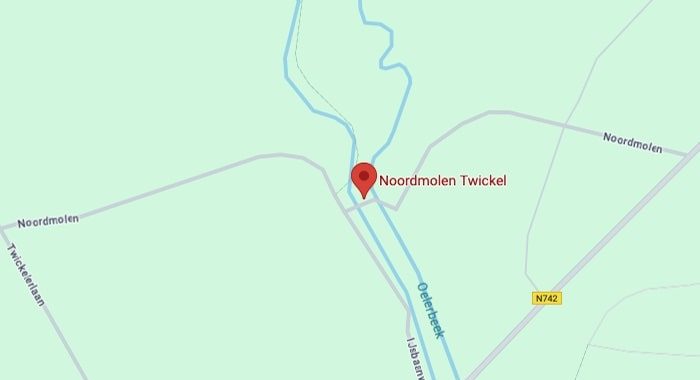
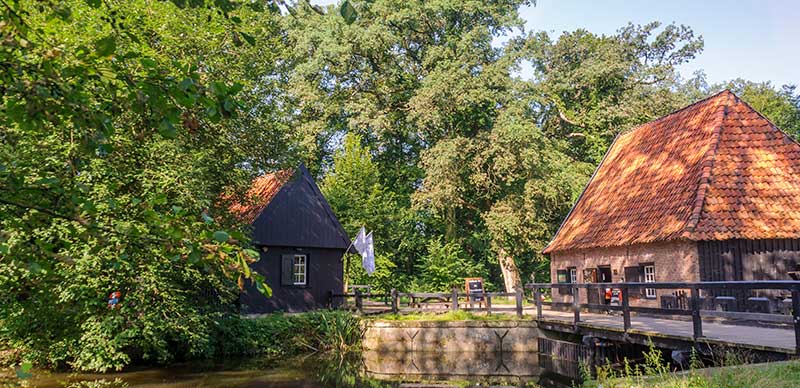
Noordmolen Twickel is more than 650 years old. In May 1347, Herman van Twicklo bought “Huize Eijsink” and the Noordmolens (North Mills) located on the Azelose stream from the gentleman farmer (nobleman) Berend van Hulscher. The deed of sale has been preserved in the archives of Twickel Castle. This refers to the Noordmolens. In the past, there was also a flour mill opposite the current oil mill. This was demolished in 1831.

Oliemolens.nl - Noordmolen-Twickel - Ambt Delden

Restoration

The mill has been restored several times, as can still be seen by memorial stones in the quay walls. The mill was restored in 1917, but downtime, partly due to a lack of water, led to further decline. In the years 1976-1978, the mill building was restored again on behalf of the Twickel Foundation. In 1984 the mill received a new water wheel, which was donated by the Rotary Club Delden-Borne. The restoration of the interior was completed in 1989.

Oliemolens.nl - Noordmolen-Twickel - Ambt Delden

The Noordmolen is back in operation

Volunteers have been keeping the mill running since May 1990. In 2006 another major repair was necessary. Not only the mill, but also the mill wheel, the quay walls and bridge were in need of renovation. In addition, a miller’s house had to be built due to the Working Conditions Act. This residence has been built as much as possible according to the old techniques used in mill construction. This very large renovation project was possible partly thanks to European subsidy (Leader+).

Oliemolens.nl - Noordmolen-Twickel - Ambt Delden

Address
Noordmolen 5
7495VK Ambt Delden (Hof van Twente)
The Netherlands

Website
Noordmolen-Twickel